

Long Sightedness
Seven Simple Ways To Manage It For A Good Vision
Whatever brought you to this article did you well. Soon you will know why I said that. The article is about a vision problem also called hyperopia. Do not be frightened by the medical jargon! If you have time, you can read a bit about it on Wikipedia. Long-sightedness occurs when ones eye muscles and iris are not flexible enough for proper functioning of the cornea and lens in focusing of light rays coming from an object in view (Fig. 1). In the condition, distant objects appear clear while close objects appear blurred – as a result of not being properly focused. This problem can be worrisome.
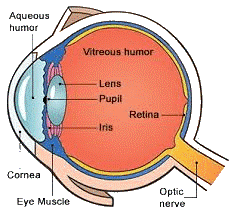

Figure 1: The Eye
In this post, I am going to narrate my experience with long-sightedness and let you know how proper vision can be regained without the use of eye glasses. We all know that eye physicians are doing a great job but some of them are quick in recommending eye glasses. Too sad! It is known that with advancement in age, someone’s vision will begin to diminish and the lens of the eyes will tend to reduce their elasticity. But not to the extent that eye glasses will be the prevailing option, as some eye physicians make us to believe, when someone is not yet over 50 years of age and or was not hit in the eye.
Before I go into telling you my experience, I hope you remember that the body is wired to heal itself? If you do, it is step number one towards regaining your full vision, if you are troubled with farsightedness.
I am a real adult and over thirty years of age. I started having problem with reading on the computer. Character sizes that I used to read with ease were becoming blurred. By the way, my work demands spending many hours on the computer. After some months, I went to see an eye physician (ophthalmologist). Examinations were carried out and the recommendation was that I should go for eye glasses. I really did not want to use glasses but what could I do? I decided that I would only take glasses for reading. The glasses were constructed. When I put them on, everything was clear. I was able to read even smaller character sizes. It looked like I had a boom in my vision. After about six months, I noticed that I would not dare to take out the glasses. If I dared, I would not see or be able to read anything! I was like, what the hell! The glasses kept deteriorating my vision! That is not what anybody would want to experience.
I decided to do something about it. I read stuff that some people have said about their experience and the possibility to regain vision with simple exercises. I acted and added my own initiatives. I did not use reading glasses again until I became over 50 years of age. If you are hyperopic and you are reading this, you will regain your vision and stop using eye glasses! Simple exercises, that will last for about 32 minutes, are only what you need to regain your vision as long as you eat well. When I say eat well, that does not mean you have to spend all your money on food. Just eat appropriately ensuring that you have enough vitamins in your meals. The time you will spend for the exercises is not up to the time you will spend consulting an eye doctor. Not to mention the peace of mind you will have for not using eye glasses.
When you start to work towards no-eye-glasses, make sure that the light you use in reading is bright enough to see normal-size characters without using glasses. This is extremely important. Determine the brightness at which you are able to read something with plain eyes and keep using this brightness whenever you want to read until your eyes become normalized after the exercises that are presented here. From now on, do not force your eyes to read tiny letters like those on products’ user agreements or warranties from manufacturers. I think some manufacturers intentionally make the letters so tiny that you will feel reluctant to read them. What do you think? As you do the exercises that I present herein, your eye muscles will begin to return to normal and the cornea and lens will start to focus properly. The exercises work like magic. But you have to show dedication and discipline. By the way, these exercises are good for everybody to maintain good vision. Even if you do not have eye problem now, you can be doing the exercises once in a while as you choose. Below are the exercises:
1. For the first exercise (Figure 2 below), you can be sitting or standing. Whichever one you choose, just be relaxed. The important thing is the movement of your eyes. Position yourself as close to one side of the wall of a room as possible. Look straight up. Your target is to see the upper corners of the wall behind you while looking straight up. Remember that the two upper corners behind you are your target. While keeping your head steady and still, move your eyes in a rhythm: 1-2, 1-2; 1-2, 1-2 (left, straight, right, straight; left, straight, right, straight). Your head should be steady and still. Be sure to move your eyes enough to see the target corners. After about 60 seconds, close your eyes (your head steady and straight up). Take a deep and long breath. Then breathe out completely. Do the breathe-in and breathe-out 5 times. Each breathe-in and breathe-out should last 3 to 5 seconds. This breathing exercise is one of the body’s strongest self-healing mechanisms. Repeat the whole exercise 2 times (a total of 3 times) – this exercise will take you about 6 minutes.
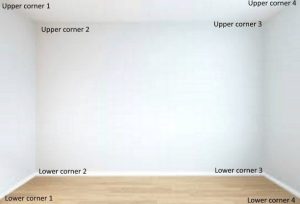

Figure 2: Corners Of A Room
2. The second exercise is like the first but this time, the movement of your eyes will be sideways. Your target is to see 90 degrees on both sides – i.e. a total of 180 degrees view. As you must have known, your head will be steady and still. Again, move your eyes in a rhythm: 1-2, 1-2; 1-2, 1-2 (left, straight, right, straight; left, straight, right, straight). Move your eye as though you want to see your ear, while keeping your head steady. After about 60 seconds, close your eyes (your head steady and straight up). Take a deep and long breath. Then breathe out completely. Do the breathe-in and breathe-out 5 times. Each breathe-in and breathe-out should last 3 to 5 seconds. Repeat the whole exercise 2 times (a total of 3 times) – this exercise will take you about 6 minutes.
3. This third exercise is like the previous ones but this time, movement of your eyes will be downwards. Your target is to see the lower corners of the wall behind you while looking straight up. As you must have known, your head will be steady and still. Again move your eyes in a rhythm: 1-2, 1-2; 1-2, 1-2 (left, straight, right, straight; left, straight, right, straight). Be sure to move your eyes enough to see the target corners. After about 60 seconds, close your eyes (your head steady and straight up). Take a deep and long breath. Then breathe out completely. Do the breathe-in and breathe-out 5 times. Each breathe-in and breathe-out should last 3 to 5 seconds. Repeat the whole exercise 2 times (a total of 3 times) – this exercise will take you about 6 minutes.
4. The fourth exercise is like the previous ones but this time, the movement of your eyes will be up and down. Your target is to possibly see your forehead and your cheeks. As you must have known, your head will be steady and still. Again move your eyes in a rhythm: 1-2, 1-2; 1-2, 1-2 (up, straight, down, straight; up, straight, down, straight). Stretch your eyes to possibly see your forehead when you move them up and your cheeks when you move them down. After about 60 seconds, close your eyes (your head steady and straight up). Take a deep and long breath. Then breathe out completely. Do the breathe-in and breathe-out 5 times. Each breathe-in and -out should last 3 to 5 seconds. Repeat the whole exercise 2 times (a total of 3 times) – this exercise will take you about 6 minutes.
5. For the fifth exercise, rub your palms together until they become warm. With your head straight up, close your eyes and place the warm palms on them, one on one eye, making sure not to press hard. You will feel the warmth of your palms on your eyes. Do not cover your nostrils. Breathe in deeply and out completely for 5 times. Each breathe-in and breathe-out should last 3 to 5 seconds. Then take off your palms and slowly blink your eyes repeatedly until you can see clearly in front – this exercise will take you about 1.5 minutes.
6. For the next exercise, lie on your side (Figure 3 below). Relax your body. Tilt your face so that you can see diagonally the upper and lower corners of the wall behind your head. Move your eyes diagonally from one corner to the other for 1 minute, at the speed of second hand of a clock. If there is any obstacle that prevents you from seeing the lower corner, move your eyes and imagine you are seeing the corner. After the 1 minute, with your head steady and still, take a deep and long breath. Then breathe out completely. Do the breathe-in and breathe-out 5 times. Each breathe-in and breathe-out should last 3 to 5 seconds. Repeat the whole exercise once (a total of 2 times) – this exercise will take you about 3 minutes.


Figure 3: Lying On The Left Side
7. For the seventh exercise, lie on your other side (Figure 4 below). Relax your body. Tilt your face so that you can see diagonally the upper and lower corners of the wall behind your head. Move your eyes diagonally from one corner to the other for 1 minute, at the speed of second hand of a clock. If there is any obstacle that prevents you from seeing the lower corner, move your eyes and imagine you are seeing the corner. After the 1 minute, with your head steady and still, take a deep and long breath. Then breathe out completely. Do the breathe-in and breathe-out 5 times. Each breathe-in and breathe-out should last 3 to 5 seconds. Repeat the whole exercise once (a total of 2 times) – this exercise will take you about 3 minutes.

Figure 4: Lying On The Right Side
Do the whole exercises two times a day (say, morning and evening). If you are not at a place where you can do the lying-down exercises, do not feel it is the end of the world! Do the other exercises and extend their duration to cover up for the exercises you are not able to do. Please relax your body as you do the exercises. No stress! Again, when you drive, if you drive, sweep your eyes in the field of view ahead of you as often as possible ensuring that you see every objects – pedestrians, cyclists, signs, parked vehicles, trees, etc. As you sweep the eyes, blink them as many times as you can. This way, you will be highly exercising your eyes, correcting your vision and be driving safely. By the time you do the exercises for three days, you will begin to see a difference, for better, in your vision. And you will be happy! Continue the exercises for one or two weeks, as your case determines. You will definitely see the good impact on your vision. When your vision has been corrected, the whole exercises are worth doing once in a while to maintain the corrected vision. You may get a cheap, non-prescription, eye drop from a pharmacy shop and apply to your eyes when you want to sleep. The eye drop will help to clear whatever is coming off of your eyes as a result of the exercise. Drink a lot of water – I have not heard of any medical advice against this! If drinking plenty of water has been your habit, then continue because that will help the reconditioning of the muscles of the eye. Note that after the first day of the exercise, you may feel a little ache in the eye. If that happens, it is as a result of the movements of the eyes. No cause for alarm. You are fine! The flexibility of the eye muscles is returning so that the cornea and lens will begin to function properly. Avail yourself of the power in the exercises! Good luck!
Bignedu
Note: Though the above is verifiable, it is only a general information and is neither a professional medical advice, diagnosis, treatment/care nor is it a substitute thereof. If they don’t help, make effort to consult with your physician or other qualified health personnel as necessary. Please see our “Terms of Use“.
Home Remedies For Constipation
No matter how much we try to prevent illness in general, it will one way or the other come upon us. The good news is that when some of them come, we must not always run to the pharmacist or doctor to get relief. We can, in the comfort of our homes, treat ourselves using easily available natural products. These products are called home remedies because they are things we use in our homes and kitchens ordinarily. In this discussion, we are going to present home remedies for constipation. Many people find it uncomfortable to enter a consulting facility and tell the doctor that they have not had bowel movement for days. As disturbing as it is, the discomfort makes them feel like hiding the situation forever. There is nothing to worry about. You don’t need to visit the pharmacist or doctor to handle constipation. You only need to go to the doctor if the case is extraordinary. Here are some useful tips on how to remedy constipation in the comfort of your home. Read through and find out how you and your family can easily remedy the illness without going to the doctor.
What Is Constipation?
Constipation is an illness that has to do with the digestive system whereby the food eaten cannot be properly digested and expelled as feces. It is characterized by less than five bowel movements per week. When you notice an irregular urge for passing of stool, the case may be constipation. Constipation can have serious negative effect on quality of life as well as on physical and mental health.
Causes Of Constipation
There are many causes of constipation which include lifestyle choices, eating at an unusual time, wrong or contaminated food, medication and disease.
Symptoms
The symptoms include discomfort when using the toilet or washroom, abdominal bloating and pain due to stool being hard, dry and difficult to pass, nausea, loss of appetite and uneasy feeling. If you tap your fingers on the stomach (as shown in the figure below), it will sound like you’re playing a drum.
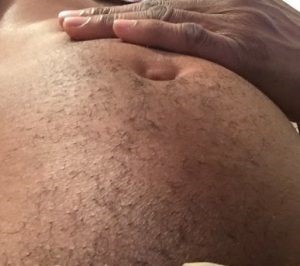

Constipated Stomach
Home Remedies
- Water
Constipation is easier to occur if one is dehydrated. To prevent this, it’s important to drink enough water during meals and stay hydrated. There is no amount of water that can be said to be too much as long as your stomach doesn’t complain. When you’re constipated, you could try finding relief by drinking some carbonated (sparkling) water to help you rehydrate and get things moving again. Some theories hold that sparkling water is more effective than tap water at relieving constipation. Do not however opt for carbonated drinks (that are not water) during constipation as they can worsen the illness.
- Caffeine
For some people, coffee can increase the urge to go to the toilet or washroom. This is because coffee stimulates the muscles in your digestive system. In fact, one study found that caffeinated coffee can stimulate your gut in the same way that a meal can. This effect is 60% stronger than drinking water and 23% stronger than drinking decaffeinated coffee. Coffee may also contain small amounts of soluble fibers that help prevent constipation by improving the balance of your gut bacteria.
- Fiber
There is a mixed opinion on the use of fiber for constipation. Yet people are advised to increase their fiber intake to treat constipation. For the pro-fibre, increasing fiber intake is thought to increase the bulk and consistency of bowel movements, making them easier to pass. A recent review found that 77% of people with chronic constipation benefited by supplementing with fiber. On the other hand, those against the use of fiber as constipation remedy insist that fibers have the tendency to worsen constipation. What is clear is that dietary fiber can increase the frequency of bowel movements. But it doesn’t help with other symptoms of constipation such as stool consistency, pain, bloating and farting.
The fiber types may help in deciding how to use it. Insoluble fiber which is found in wheat bran, vegetables and whole grains add bulk to your stools and are thought to help them pass more quickly and easily through your digestive system. Soluble fiber which is contained in oat bran, barley, nuts, seeds, beans, lentils and peas, as well as in some fruits and vegetables absorbs water and forms a gel-like paste which softens the stool and improves its passing consistency. To prevent constipation, you should aim to consume a mix of soluble and insoluble fibers. The total recommended fiber intake per day is 25 grams for women and 38 grams for men.
- Prunes
Prunes and prune juice have been recommended as a great remedy for constipation. In addition to fiber, prunes contain the natural laxative sorbitol. This is a sugar alcohol that has a laxative effect. It has been posited that prunes may be more effective than fiber. If you’re constipated, prunes could be the easiest natural solution available. Just take about 50 grams (which is about 7 medium-sized prunes) of prunes two times every day. However, you may want to avoid prunes if you have IBS (Irritable Bowel Syndrome), as sugar alcohols are known FODMAPs (that is, Fermentable Oligo-saccharides, Disaccharides, Monosaccharides And Polyols).
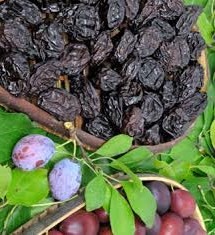

Prunes
- Bacteria/ Probiotics
Healthy bacteria in the body are good to keep our digestive system working properly, especially in these times that our stomachs are getting pounded with all sorts of processed sugars and foods. Working to keep the good bacteria in our bodies strong and plentiful will help prevent constipation and lessen the severity when it occurs. Probiotics treats constipation by increasing the frequency of bowel movements and improving stool consistency. There are a number of ways to go about helping your bacteria flourish, but one simple method is to enjoy a cup of yogurt. Take a cup of yogurt during breakfast and then on its own or with snacks throughout the day. Sauerkraut and kimchi also contain live, friendly bacteria. Foods that are high in prebiotics such as garlic, onions and bananas help to feed these friendly bacteria in the gut.
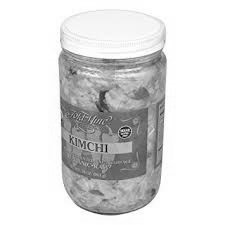

Kimchi
- Olive Oil
Pure olive oil is more than just a healthy and tasty fat. It can also help relieve constipation. It’s not surprising really when you consider the texture of olive oil. It stimulates your digestive system which helps get things move through your colon, and taken regularly, it can prevent constipation as well. Take one tablespoon of olive oil in the morning. It works best on an empty stomach, so take it before you have your meal. If you forget, wait until later when you haven’t eaten for a while. You can mix the olive oil with a little bit of lemon juice, if you want, to lighten the flavor. Remember that lemon juice also acts as a natural aid for constipation. A cup of lemon juice mixed with warm water is cool for alleviating constipation.
- Flaxseed Oil
Flaxseed oil is a wonderful simple home remedy for constipation. It clears the walls of the intestine, as well as stool, and increases the number of bowel movements you are having. Enjoying the oil with orange juice is recommended when it comes to constipation treatment, since oranges have a good amount of fiber in them. Try to get the orange juice with pulp, which is what has most of the fiber content. Mix 1 tablespoon of flaxseed oil with 1 glass of the orange juice. Drink as needed, but give at least 5 hours interval so you don’t overdose. It needs time to really sink and soak into your body.
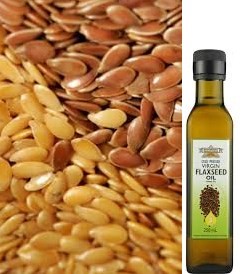

Flaxseed Oil
- Aloe Vera
Aloe Vera can also soothe your tummy, among other good uses. It’s best to use pure aloe vera gel from the plant. The gel straight from the plant is more concentrated than commercial aloe juice so don’t use more than 2 tablespoons. If you don’t have an aloe plant, then drinking aloe juice can accomplish similar results. Mix two tablespoons of pure aloe vera gel with fruit juice and drink in the morning. Keep drinking one cup of aloe vera juice as needed.
- Create A Routine
It sounds silly and awkward but it helps as well. You can create a timetable for visiting the toilet or washroom. It is a great way to relieve and prevent constipation in humans. Regulating the timing of when you go to the washroom will regulate your bowel movements as well and your body system will get used to the timetable. Set aside about 15 minutes for anywhere from 1 to 3 times a day, and stay in the washroom, even if nothing happens. Make sure you stay relaxed, and eventually your body system will catch on. Mere squatting on the WC (Water Closet) can help relieve constipation and kick start your colon. It’s a natural position that our body interprets as “time to crap, offload and scrap!”
- Baking Soda
Baking soda does a lot of job with regards to treating sicknesses at home. It can boast of 95% effectiveness in those usages. It works incredibly well for constipation (and tummy aches in general) because it is a bicarbonate which will encourage air to exhaust your body system one way or another, and relieve pain from pressure. It also re-alkalizes the stomach, neutralizing the acid a little bit and helping things pass through your gut. Mix 1 teaspoon of baking soda with ¼ cup of warm water. Drink all of the mixture. The quicker you finish it, the better it should work. Gulp down the cup quickly and wait for the result. You might be prompted to belch. Upload the belch without hesitation, if prompted!
- Epsom Salt
There are two major reasons why Epsom salt is a good choice and an effective home remedy for constipation. First, the salt drops water around its surroundings, softening up stool and making it easier to pass. Second, the magnesium that is present in the salt promotes contraction of the bowel muscles which also makes passing of stool easier. Table salt can be useful in terms of dropping water around but it lacks the magnesium that Epsom has. So try and use Epsom salt if possible. Dissolve 2 teaspoons of Epsom salt in one cup of water or fruit juice and drink all of it. If after 4 hours there is no sign of bowel movement, you may take one more dose. For children above two years, use ½ teaspoon.
- Dandy Dandelions
A terribly annoying weed, dandelions will certainly get a different view after they help relieve your constipation. The constituents of dandelions make it a gentle laxative as well as an effective detoxifier, and a cup of dandelion tea will be enormously beneficial to those who are suffering from constipation due to inactiveness or the consumption of a lot of processed foods (you need to eat healthy and exercise too). Put 1 to 2 teaspoons of dried dandelion leaves into a mug, and pour hot water over them. Cover and let steep for 6-10 minutes. Drink this about 3 times a day. Don’t hesitate to share the testimony.
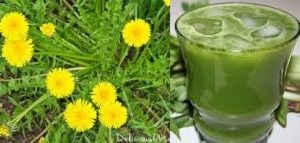

Dandy Dandelion
- Breathing Exercise
A very good breathing exercise is able to help you out of the constipation. For details on how to do the breathing exercise, see the article on blog page about long-sightedness. The breathing exercises described in the article are also good for relief from constipation.
The above are the remedies for the illness constipation. We hope they will help you or anyone you know out of the illness. Pay attention to the directives so that you will be sure to see the effectiveness of each remedy.
Bignedu
Note: Though the above is verifiable, it is only a general information and is neither a professional medical advice, diagnosis, treatment/care nor is it a substitute thereof. The piece does not cover all conditions or remedies associated with the illness. Make effort to consult with your physician or other qualified health personnel as necessary. Please see our “Terms of Use“.
The topics below may also be helpful: